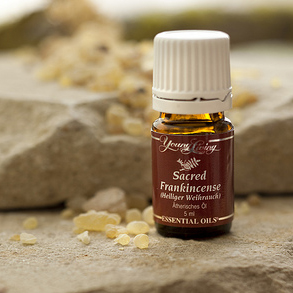
 The healing effects of Frankincense!
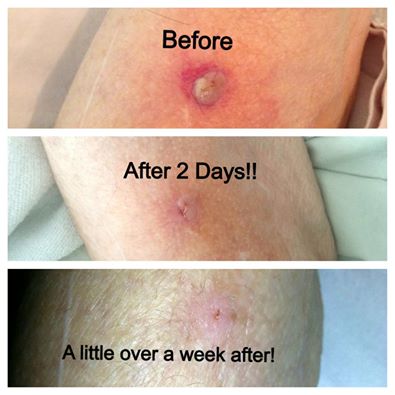
Once again, Young Living has proven itself! Like I said previously, I am a registered nurse with the blessing of dealing with hospice patients. One of my patients had developed this questionable lesion on her right arm in literally a couple of days. It was assumed by our medical director that this particular lesion could be a form of skin cancer. According to the patient’s daughter, she has a history of skin cancer and previously had an almost exact lesion form in the past. That particular lesion was later biopsied and confirmed to be a form of cancer. It of course had to be treated at the time and removed. Now on hospice due to other health conditions, if something like this appears, it would be left to evolve on it’s own and most likely to worsen. Hospice care specifically focuses on palliative care and not curative. (Don’t get me wrong, hospice is a beautiful and wonderful thing and is very beneficial to the patient and family involved.) Anyways, the daughter was very worried about this lesion that had appeared nonetheless. It just so happened upon my visit, I had on hand some Sacred Frankincense. With permission given by the daughter, I applied Sacred Frankincense to the site (just one drop then spread). I then gave a small sample bottle to the daughter to apply daily. She applied once in the morning and once before bed. Literally, just two days later, the lesion began to disappear and within a period of just a little over a week, the lesion is almost gone! Incredible!! You see, Frankincense works by regenerating cells to it’s original form. It helps repair the DNA of cells when damaged. 95% of cancer results from damaged DNA. Frankincense is also made up of 70% monoterpenes which increase the level of liver enzymes that are involved in removing carcinogenic (cancer causing) toxins. The constituents in Young Living essential oils never cease to amaze me. Obviously, the route of applying the oil topically is FAR more less invasive then the way modern medicine were to treat. These are ways and descriptions of treatment options currently used to treat forms of skin cancer (copied and pasted from mayoclinic.com):
“Freezing. Your doctor may destroy actinic keratoses and some small, early skin cancers by freezing them with liquid nitrogen (cryosurgery). The dead tissue sloughs off when it thaws.
Excisional surgery. This type of treatment may be appropriate for any type of skin cancer. Your doctor cuts out (excises) the cancerous tissue and a surrounding margin of healthy skin. A wide excision — removing extra normal skin around the tumor — may be recommended in some cases.
Mohs surgery. This procedure is for larger, recurring or difficult-to-treat skin cancers, which may include both basal and squamous cell carcinomas. It’s often used in areas where it’s necessary to conserve as much skin as possible, such as on the nose.
During Mohs surgery, your doctor removes the skin growth layer by layer, examining each layer under the microscope, until no abnormal cells remain. This procedure allows cancerous cells to be removed without taking an excessive amount of surrounding healthy skin.
Curettage and electrodesiccation or cryotherapy. After removing most of a growth, your doctor scrapes away layers of cancer cells using a device with a circular blade (curet). An electric needle destroys any remaining cancer cells. In a variation of this procedure, liquid nitrogen can be used to freeze the base and edges of the treated area.
These simple, quick procedures may be used to treat basal cell cancers or thin squamous cell cancers.
Radiation therapy. Radiation therapy uses high-powered energy beams, such as X-rays, to kill cancer cells. Radiation therapy may be an option when cancer can’t be completely removed during surgery.
Chemotherapy.In chemotherapy, drugs are used to kill cancer cells. For cancers limited to the top layer of skin, creams or lotions containing anti-cancer agents may be applied directly to the skin. Systemic chemotherapy can be used to treat skin cancers that have spread to other parts of the body.
Photodynamic therapy. This treatment destroys skin cancer cells with a combination of laser light and drugs that makes cancer cells sensitive to light.
Biological therapy. Biological treatments stimulate your immune system in order to kill cancer cells.”
Not only are these methods of treatment invasive, they do not guarantee that all cancer cells are removed or won’t return with a vengeance. A lot of times as well, exposure to various radiation and chemotherapy drugs will increase your chances of cancer reoccurring. This is because that form of treatment destroys/alters the good cells with the bad. Again, cancer cells are altered normal cells that end up taking over. In contrast, Frankincense works by reprogramming the DNA of only the cancer cells back to it’s original blueprint of normality, the natural way. Frankincense also allows oxygen to be carried to the cells. Where an increase of oxygen exists, cancer cannot survive. It is simply incredible how Frankincense is so potent when treating various issues we have occurring within our body. With all that said, which option would you try first?
If you would like to find out more information on Frankincense and Young Living essential oils, feel free to ask below!!
(Permission by the patient’s daughter was given to use these photos)
 Whole Lifestyle Momma